
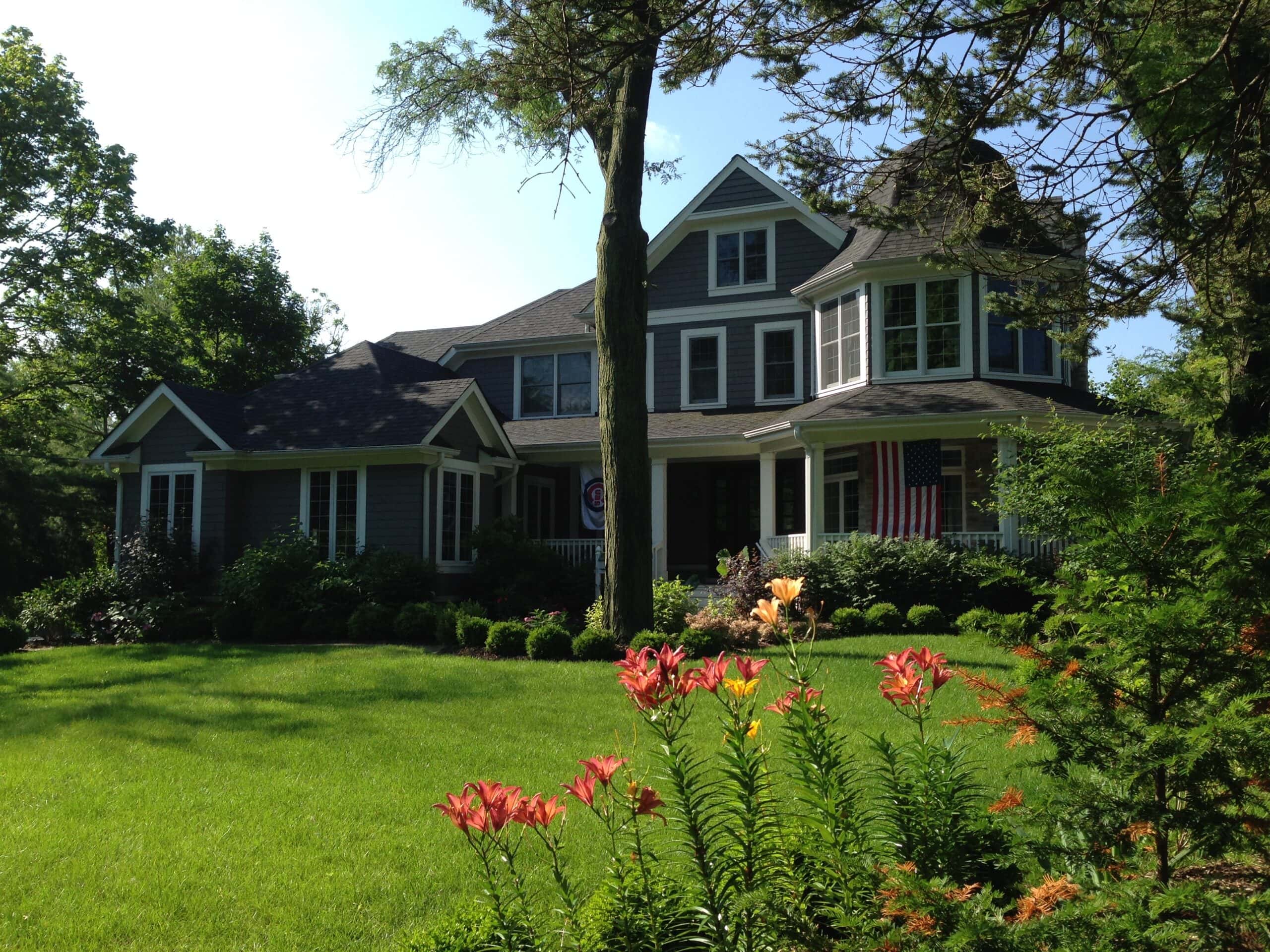
A family built their Deerfield home with us more than ten years ago. Here’s what they recently told us about it:
“We frequently have strangers stop us outside and tell us that our house is their favorite in the area.”
And then: “We wouldn’t change anything about our house.”
Nobody stops on the sidewalk to admire square footage. They don’t stop for the priciest finish or the biggest kitchen. They stop because a house looks like it belongs: to its street, to its land and to the people inside.
Why it matters: Most families build or remodel a home once or twice in a lifetime. Get it right and the house still feels right a decade later. Get it wrong and you live with a house that looks like everyone else’s, or one that never quite fits.
The big idea: Houses with a story are designed in a particular order. Start with what’s hardest to change, and finish with what’s easiest. Most houses are designed the other way around.
1. Start with the land. It’s the one thing you can’t change.
You can move a wall. You can’t move the sun.
Before I draw a single room, I walk the lot. Where does the sun rise and set? Which trees frame a view, and which are in the way? Where does water go when it rains? What can the neighbors see? What do the village’s rules allow?
Chicago got a famous lesson in this back in the 1880s. On Prairie Avenue, where mansions faced the street to show off, architect H. H. Richardson designed the Glessner House as a granite fortress with few windows to the street, wrapped around a private courtyard so the main rooms face south into the sunlight. Neighbor George Pullman complained about “that thing staring me in the face.” Today it’s a National Historic Landmark.
The same rule holds on a teardown. On a recent Glenview project, the old house came down, but the sun, the trees, the grade, and the neighbors all stayed. That’s why the work started with land planning, not a floor plan.
2. Then design for how you actually live.
The second layer is you. Not the house you think you’re supposed to want, but how you really spend a Tuesday night.
One Burr Ridge couple rehearses with a brass quintet, hosts intimate dinner parties, gardens in containers and owns forty thousand books. Their home has a music room, a great room with acoustic clouds overhead, a garden and potting room, and a reading library, with storage for 10,000 more volumes in the lower level. None of those rooms came from a style. Every one came from a conversation.
I call that Chosen Square Feet. The opposite is Inherited Square Feet: space a house picks up by accident through The Cascade, a chain of individually reasonable decisions. The mudroom grows a little, which pushes the garage out, which widens the roof, which makes the room above bigger. Nobody chose that space, but in Northern Illinois, where homes cost $350 to $750 per square foot, everybody pays for it.
Houses people walk past are often full of inherited square feet. Houses people stop for are full of chosen ones.
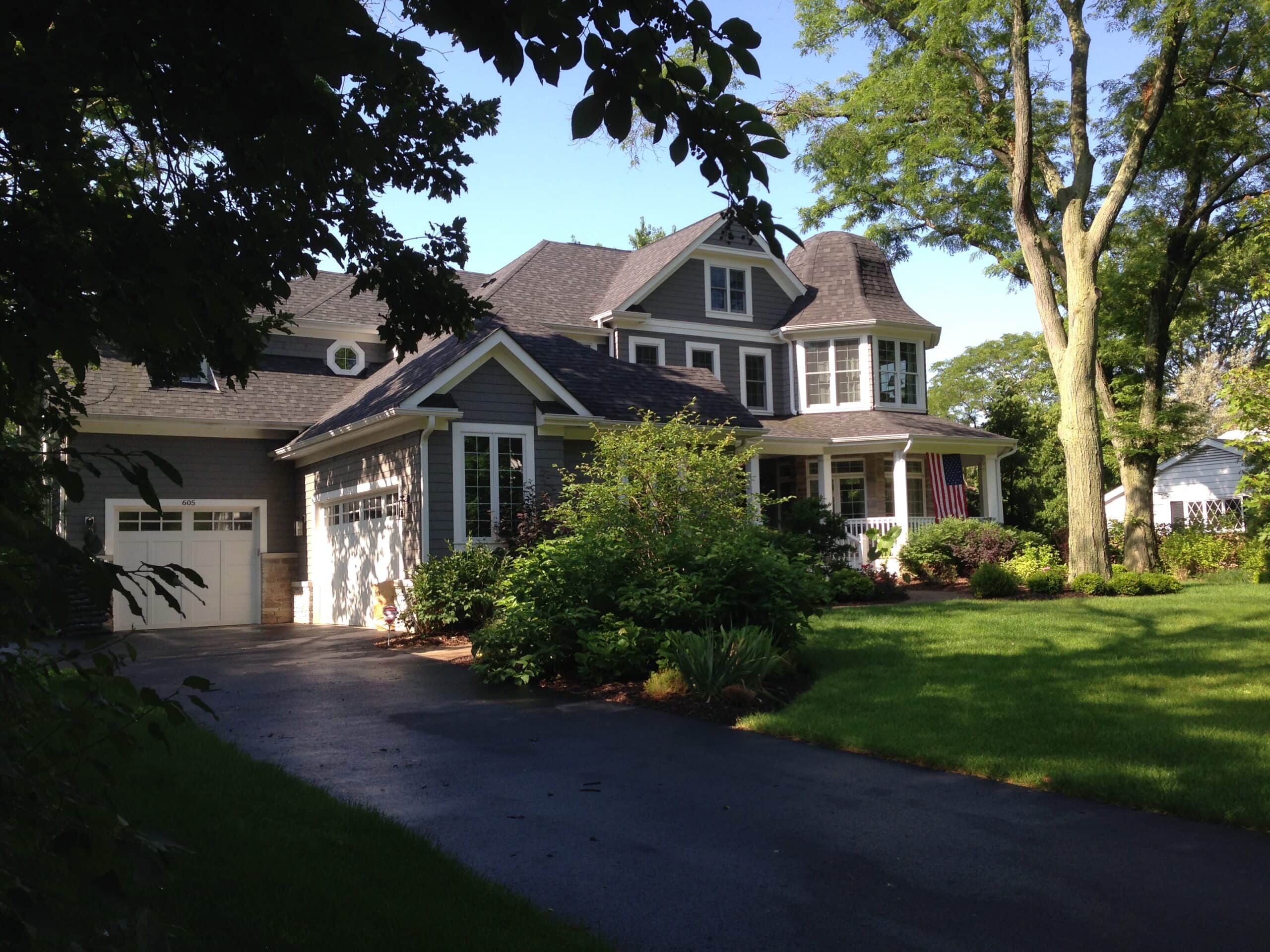
3. Then the details. That’s where a house becomes yours.
A feature can go in any house. A detail only makes sense for the people who asked for it.
In that Burr Ridge home, the entry borrows from Japanese houses: a lowered genkan where you take off your shoes before stepping up into the house. Everywhere else, ramps and bridges replace steps. At the front door, the step is the point. In the kitchen, see-through upper cabinets provide storage without closing the room in.
Details like these depend on craftspeople: the millwork shop that builds casework exactly as drawn, and the landscape architect who makes the garden part of the house. A house with a story is always a team effort.
4. If your house already has a story, keep it.
Not every project starts from scratch. Most of us live in older homes. The median owner-occupied house in the U.S. is now 42 years old, according to NAHB’s analysis of Census data.
The fear I hear most about remodeling isn’t the budget. It’s losing what made you buy the house. The good news is that character and function live in different places:
- Slow layers hold the character: how the house sits on its lot, its shape and roofline, its windows and exterior materials.
- Fast layers hold what needs updating: wiring, plumbing, heating and cooling, kitchens, baths and closets.
Change the fast layers freely. Touch the slow ones carefully. And start every remodel with a keep list by asking what made you buy this house in the first place.
Five questions to ask before anyone draws anything
- What about our site can never change, and how can the house make the most of it?
- How do we actually spend a Tuesday night, and a holiday?
- Which rooms would we never see in a showroom but can’t live without?
- If we’re remodeling, what’s on our keep list?
- Who’s on our team, and have they worked together before?
Bottom line
The houses strangers stop to admire aren’t the biggest on the block. They’re the ones where every part has a reason, and the reasons belong to the people who live there.
This Thanksgiving, I’m grateful to every family who has trusted us with their story.
Your next step: If 2027 is your year to build or remodel, start now, because design runs months ahead of construction. Book an Intro Call before year-end, and bring the story you want your house to tell. Looking at a lot or an older home? Ask about our Clear Scope Analysis to learn what you can build before you buy.
