

There’s a common way people think about professional fees: more hours means more value, fewer hours means less cost. It sounds logical. But when it comes to architecture, that framing leads you in the wrong direction.
What you’re really investing in isn’t time on a clock. It’s the quality of the decisions that get made—especially early in the process, before a single permit is filed or a shovel hits the ground.
The Decisions That Shape Everything
Most of the choices that determine whether a project succeeds or struggles don’t happen during construction. They happen months before.
Where does the home sit on the lot? How does it capture morning light in the kitchen and evening views from the living room? What does the zoning allow—and where does it restrict you? Is the budget realistic for what you’re actually trying to build?
These aren’t finishing touches. They’re foundational decisions. And they’re exactly where experienced judgment makes the biggest difference.
Get them right, and the rest of the project flows. Get them wrong, and you spend the rest of the project working around them—often at significant cost.
Early Clarity Protects Your Budget
One of the most common concerns we hear from clients is this: What if I spend everything and still don’t get what I envisioned?
That fear is legitimate. It happens when projects move too fast at the start and too slowly to correct course later.
This is why every project at Mark Eric Benner — Architects, Ltd. begins with what we call the ClearScope Analysis—a thorough review of zoning regulations, site constraints, and early cost estimation, completed before the design process is fully underway.
It’s not a formality. It’s the most important decision-making step we take together.
If you’re planning a custom home on Chicago’s North Shore, we want to know exactly what the municipality allows before we fall in love with a design concept. If you’re building a retreat in Summit County, we need to understand the site’s solar orientation, snow load requirements, and view corridors before placing a single wall. If you’re adding to a Lake Geneva vacation home, early cost clarity helps you decide where to invest and where to simplify.
The ClearScope Analysis is how we protect your investment from day one—by answering the right questions before they become expensive surprises.
Better Decisions Look Like This
A “better decision” in architecture isn’t always about avoiding disaster. Sometimes it’s subtler than that.
It’s placing a kitchen window so natural light arrives exactly when you need it in the morning. It’s designing a mudroom entry that actually fits how your family moves through the house. It’s orienting a great room so the fireplace and the mountain view work together, not against each other.
This is what we call intent-based design. We’re not designing rooms—we’re designing around how you actually live. Your daily routines, your family’s rhythms, the way you use a space in January versus July. A home designed with that kind of intentionality doesn’t just look right. It feels right, every single day.
These decisions are where the real value lives. And they require clarity—asking the right questions early, then making sure everyone at the table is working from the same understanding.
Seeing It Before It’s Built
One of the reasons architectural decisions used to feel risky was straightforward: clients couldn’t fully see what they were agreeing to. A floor plan is a useful tool, but it doesn’t tell you how a room will feel.
That’s changed.
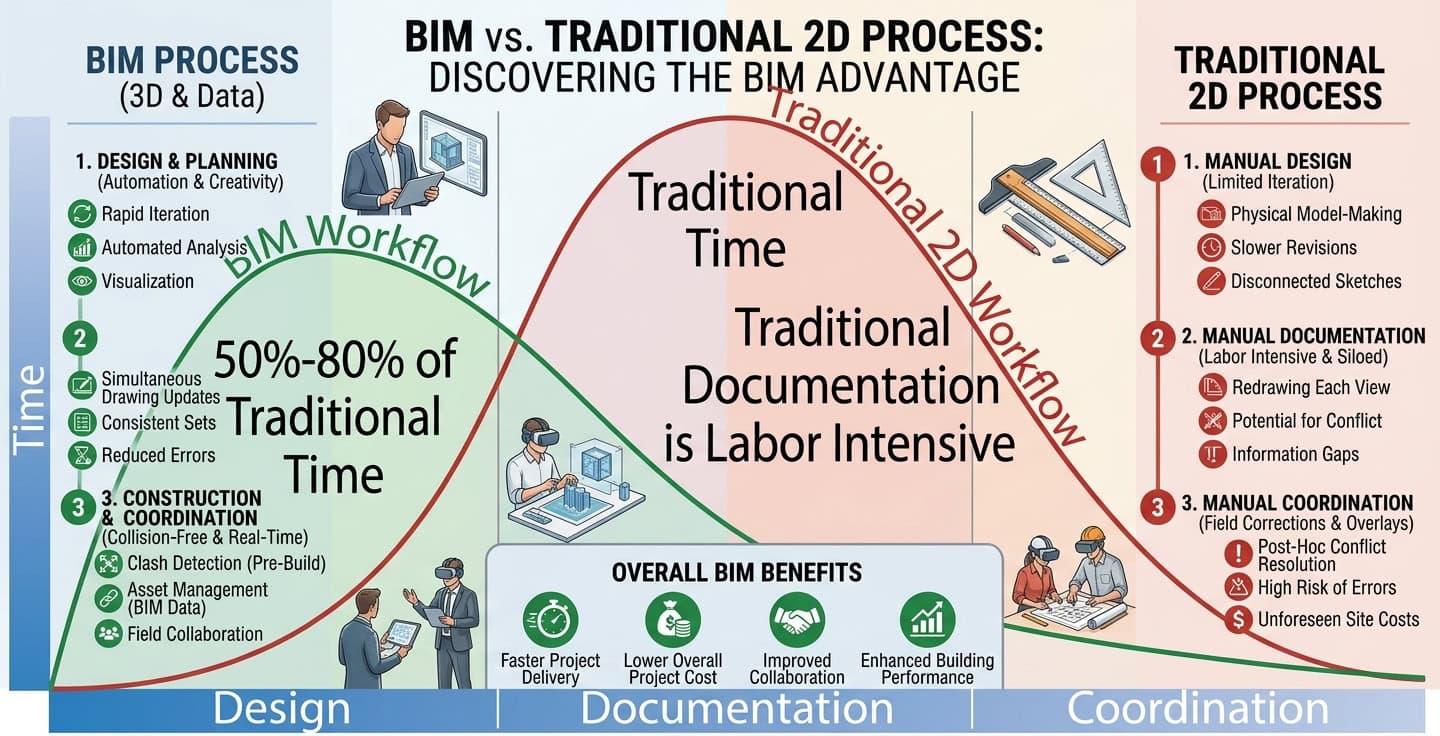
At MEBA, we use advanced 3D visualization and Building Information Modeling—what we call VRchitecture—to let you walk through your project before it exists. You’re not being asked to trust the architect’s imagination. You’re seeing the space, understanding how it flows, and making confident decisions based on what you actually see.
This closes one of the most common and costly gaps in residential design: the distance between what a client imagined and what gets built. When that gap is eliminated early—through clear visualization, honest conversation, and informed decisions—the entire project runs better.
The Principle Applies Across Every Project Type
Whether you’re building a family legacy home in the Chicago suburbs, planning a commercial facility, or working on a community-focused affordable housing project, the principle holds. Early, clear, and collaborative decisions shape everything that follows.
The investment isn’t in keeping an architect busy. It’s in the quality of the thinking that shapes your project before construction begins—and the confidence you carry all the way through it.
What This Means for You
If you’re early in the planning process—or just starting to wonder whether a project is even feasible—that’s exactly the right time to have a conversation.
Not to sign a contract. Not to get a proposal. Just to start making better decisions together.
That’s where it all begins.
