
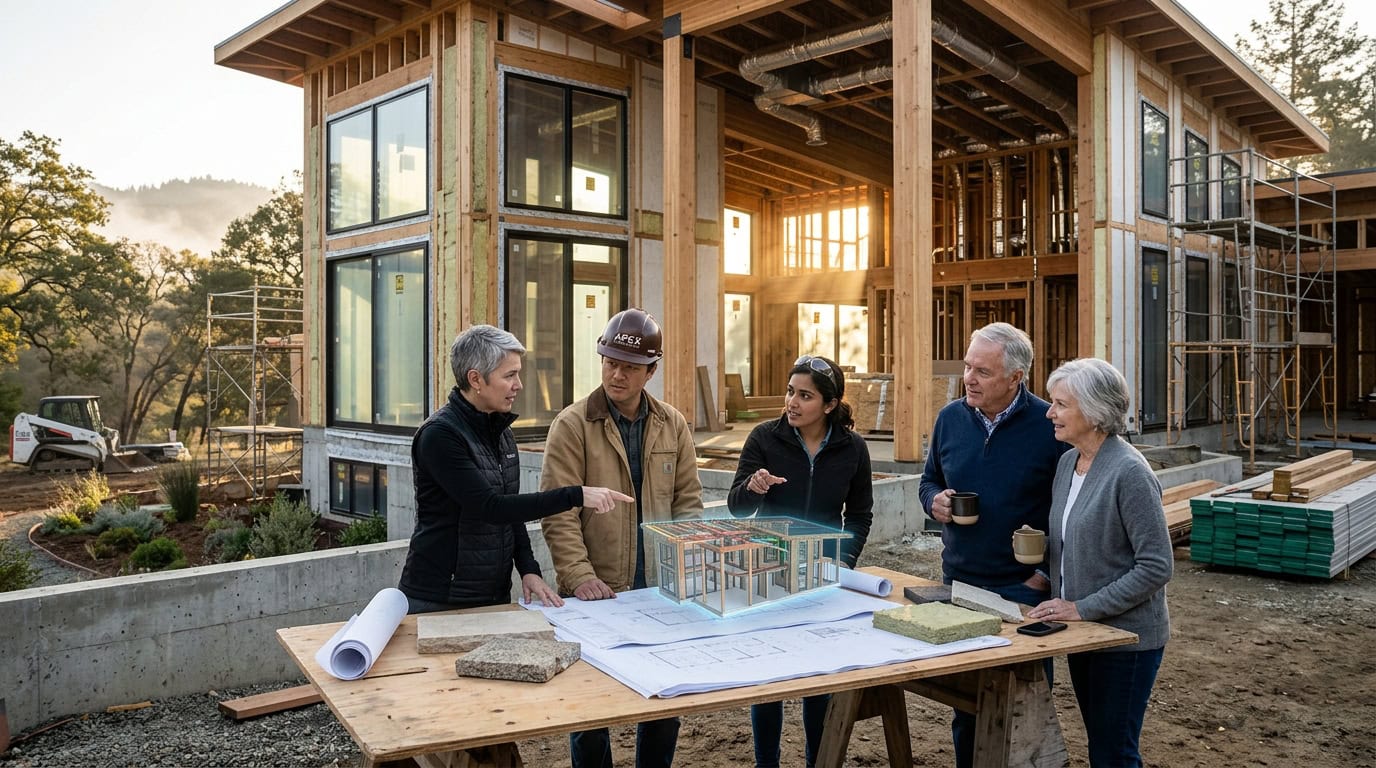
Why Great Homes Begin with Better Questions
831 Words | 4 min read
Luxury homes are changing. Today’s most successful homes are no longer judged only by square footage, finishes, or curb appeal. They’re evaluated by something deeper: How they perform.
That means:
- Lower energy consumption
- Better indoor air quality
- Greater comfort
- Smarter systems integration
- Reduced maintenance
- Long-term resilience
- And healthier living experiences
A recent article by Drew Smith for Pro Builder highlighted how The New American Home 2026 achieved extraordinary performance benchmarks through one critical strategy:
Early and continuous collaboration.
That idea aligns directly with how Mark Eric Benner – Architects approaches luxury residential design. Because exceptional homes are not created by isolated decisions. They emerge from a coordinated process.
Performance Starts Before the Floor Plan
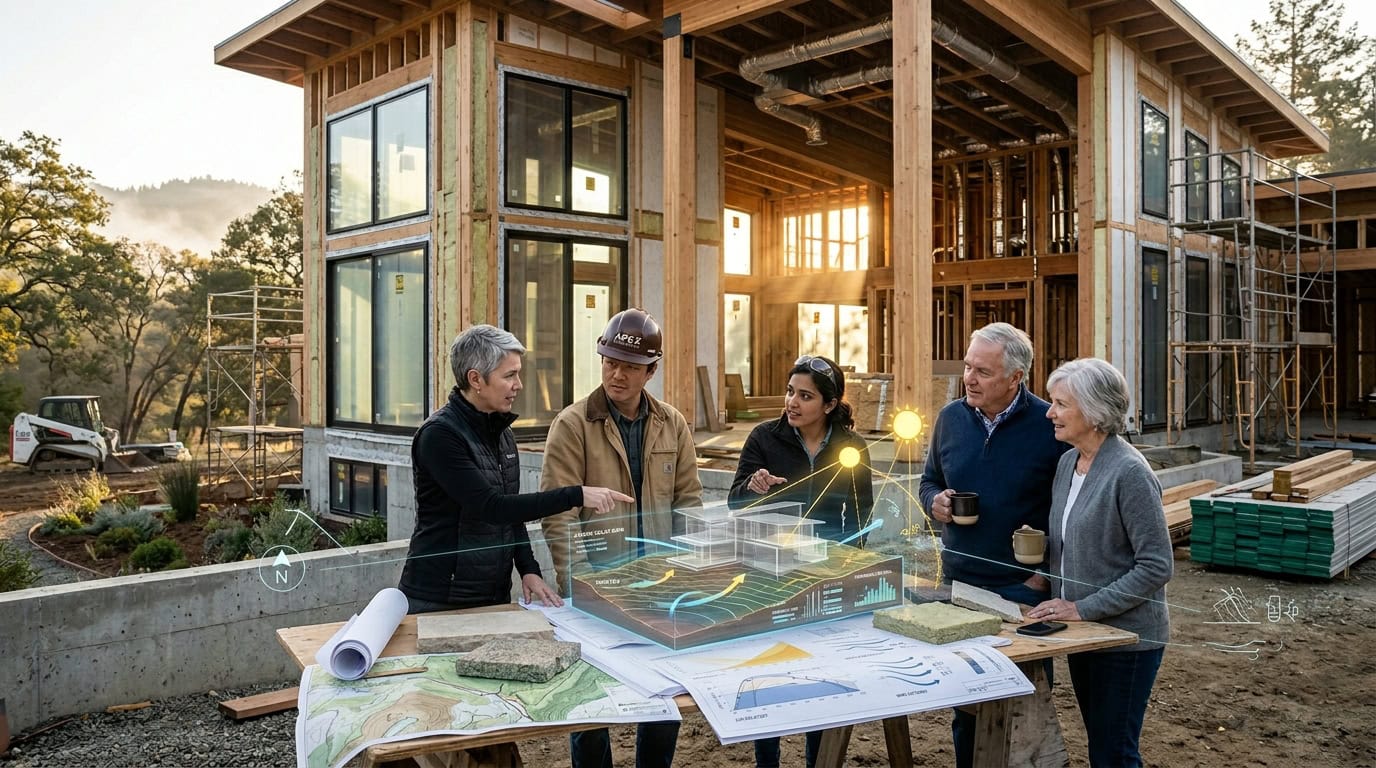
One of the most important insights was simple: High performance is determined early, not during construction, not after finishes are selected, not by adding solar panels at the end. The biggest performance gains happen during:
- Site analysis
- Orientation studies
- Massing exploration
- Mechanical coordination
- Envelope detailing
- Early budgeting discussions
- Collaborative design reviews
At MEBA, this thinking begins during the Pre-Design and Project Research phases of the architectural process. That phase includes:
- Programming
- Site analysis
- Budgeting
- Code analysis
- Space schematics
- Existing conditions evaluation
- Consultant coordination
Why does this matter?
Because earlier decisions are made intelligently, fewer costly corrections are needed later.
The Best Luxury Homes Work as Integrated Systems
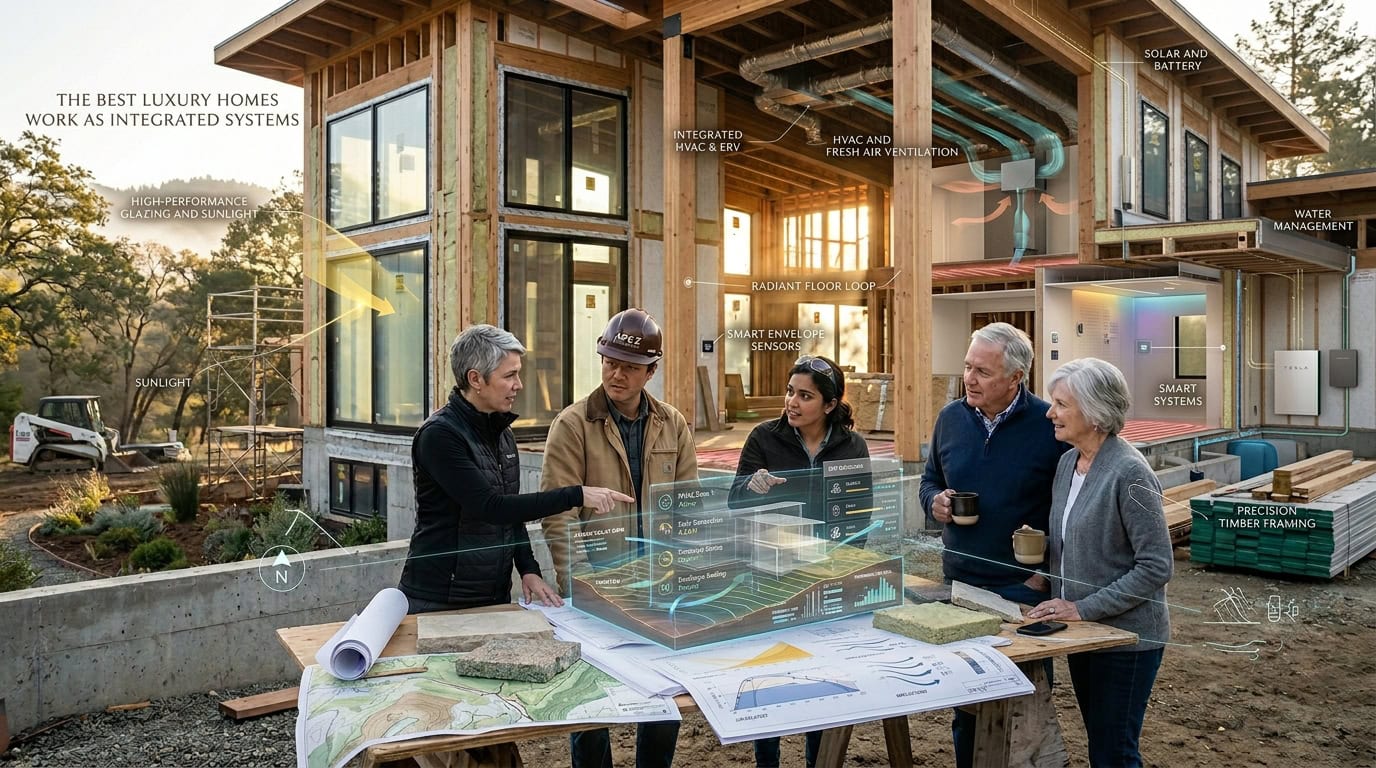
Many homes are designed in fragments. The architect designs one piece. The builder solves another. Mechanical systems get squeezed in afterward. That siloed approach creates inefficiencies. The highest-performing homes are designed holistically. This is demonstrated beautifully through:
- Advanced thermal envelope design
- Right-sized HVAC systems
- Intelligent humidity control
- Strategic insulation detailing
- Solar integration
- Water conservation
- Indoor air quality planning
None of these systems work independently. They succeed because they were coordinated together. At MEBA, this systems-based thinking is embedded into the Design Development phase, where major decisions regarding materials, mechanical systems, windows, and building assemblies are refined collaboratively. This is where architecture shifts from appearance to performance.
BIM Changes Everything
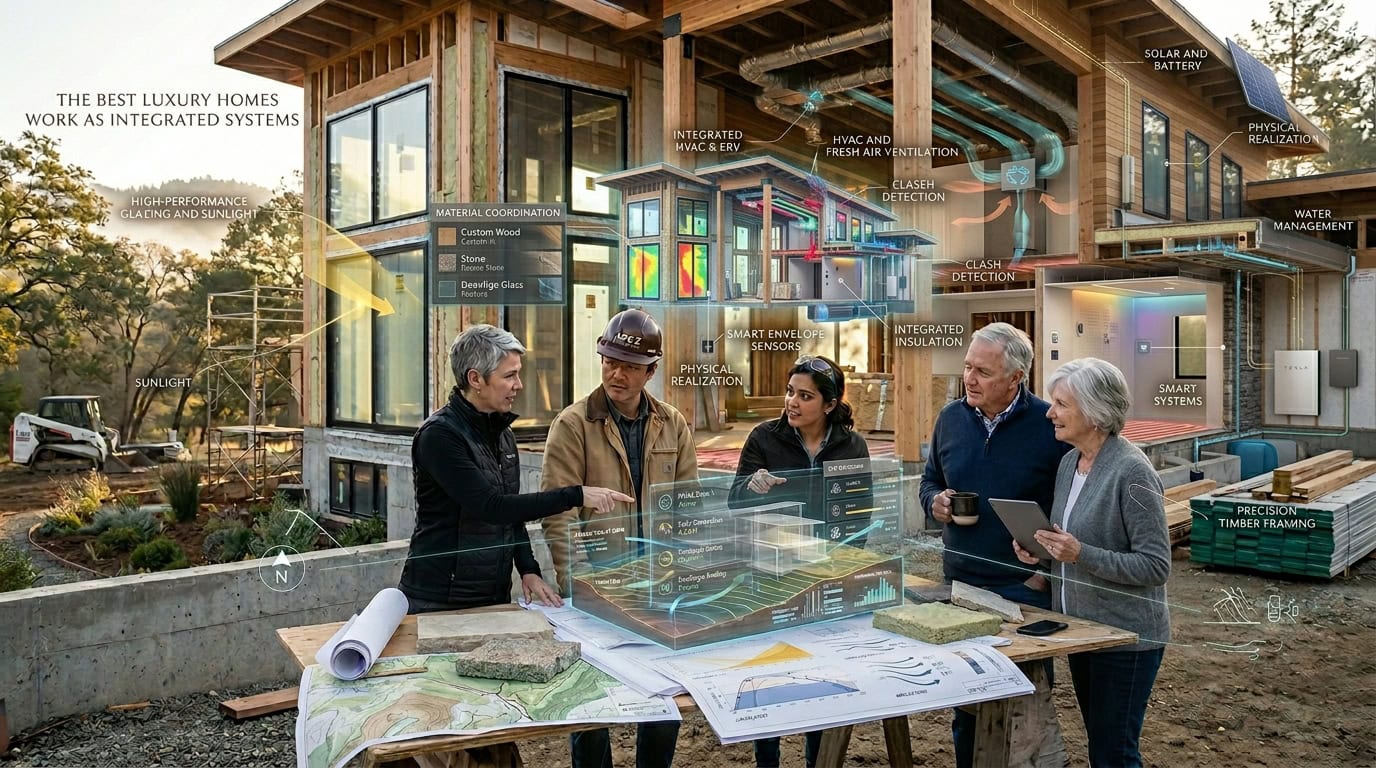
One major reason performance-driven homes are becoming more successful is the rise of Building Information Modeling (BIM). Traditional 2D drawings leave too much open to interpretation. BIM allows the entire project team to:
- Visualize conflicts early
- Coordinate systems accurately
- Understand building performance
- Improve estimating precision
- Reduce costly field changes
- Communicate clearly with homeowners and trades
MEBA’s integrated 3D process helps homeowners visualize their home long before construction begins. That clarity creates confidence, and confidence reduces friction. As Mark often says: “Clarity out of chaos.”
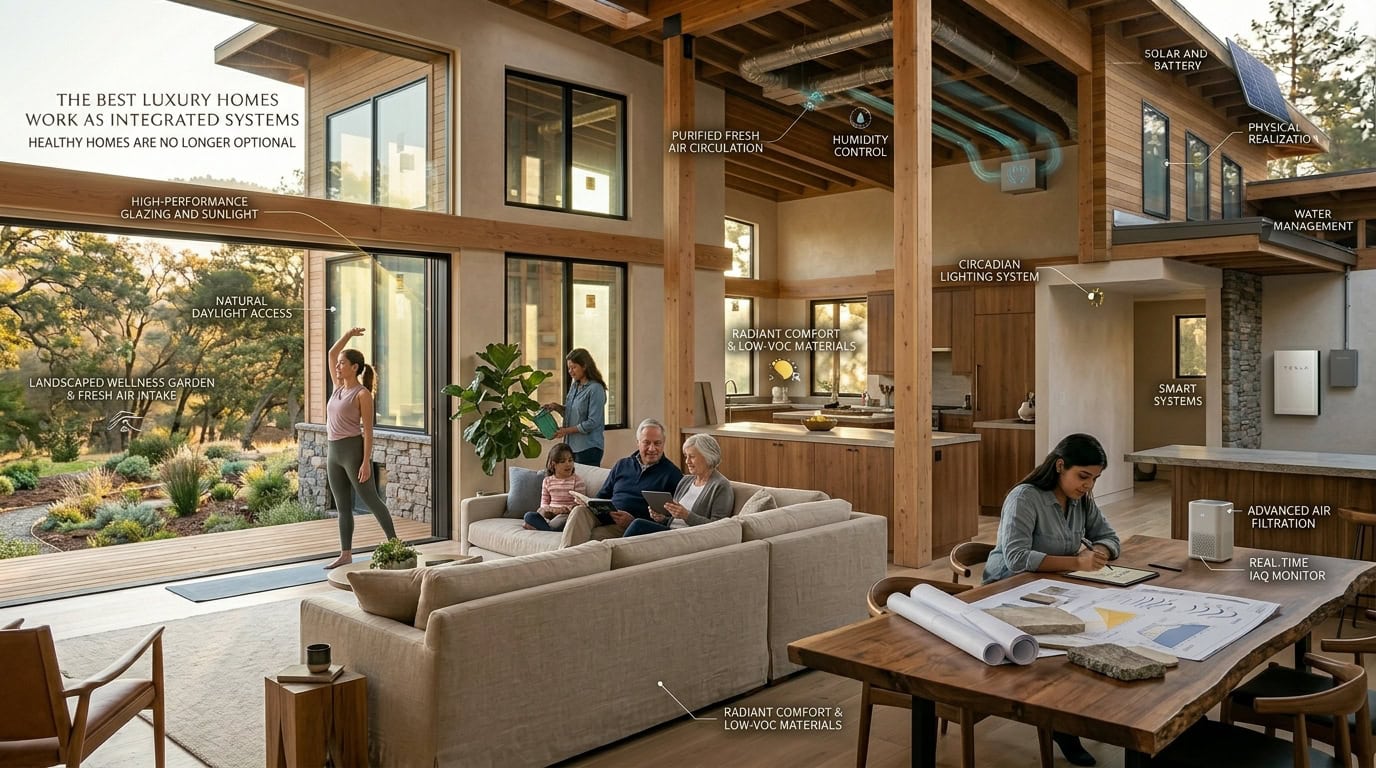
Healthy Homes Are No Longer Optional
Luxury homeowners are becoming increasingly aware of how architecture affects wellness. Today’s high-performance home embraces:
- Low-VOC materials
- Sealed ductwork
- Advanced filtration
- Humidity management
- Indoor air quality
- Reduced toxins
This reflects a growing shift in residential architecture. Homes are no longer simply shelters; they are wellness environments. At MEBA, thoughtful design prioritizes:
- Natural light
- Material authenticity
- Indoor-outdoor connection
- Spatial flow
- Human experience
- Long-term livability
The firm’s design philosophy consistently emphasizes homes that are deeply responsive to lifestyle, site, and well-being.
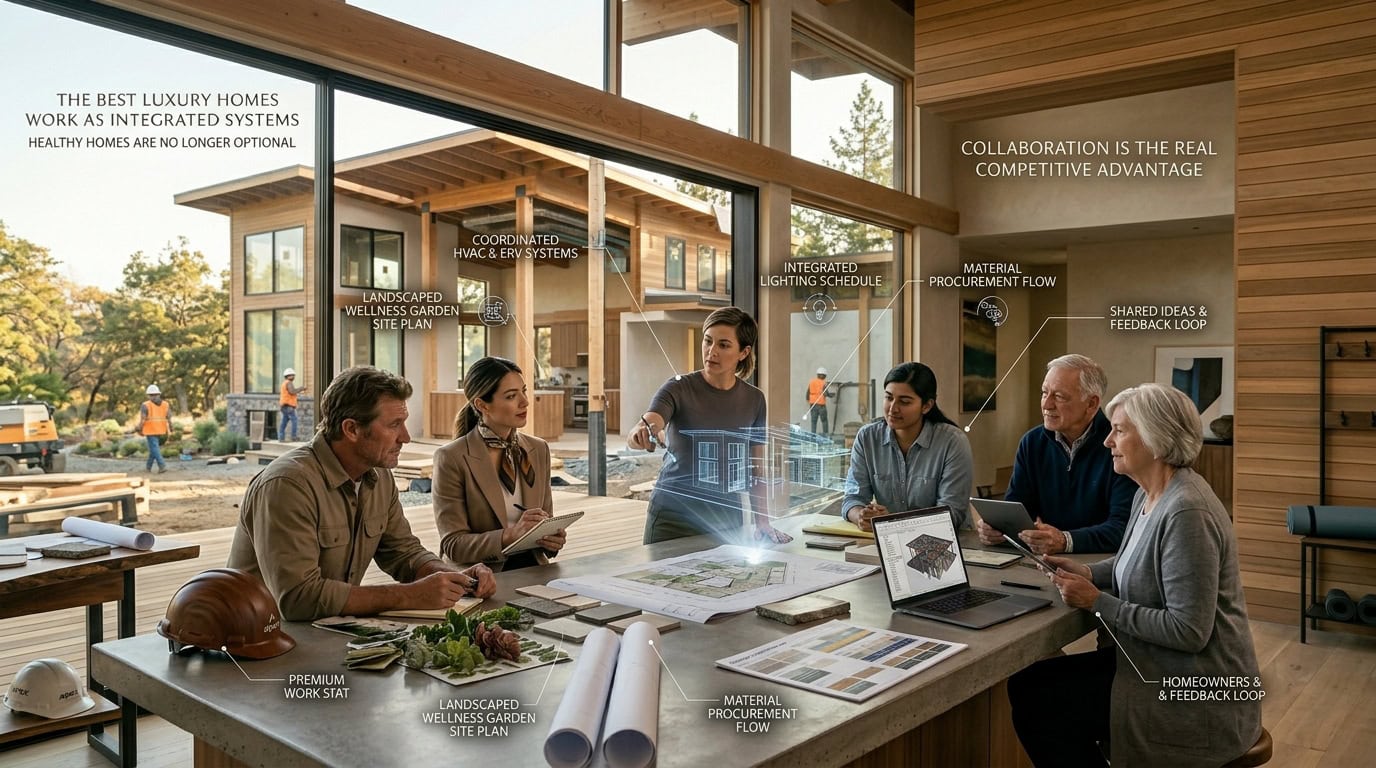
Collaboration Is the Real Competitive Advantage
The most important lesson may not be about technology at all. It may be about teamwork, collaboration, and clarity of the goals:
- Builder involvement early in design
- Honest conversations
- Consultant coordination
- Shared accountability
- Continuous communication
That mirrors MEBA’s collaborative philosophy. The best projects happen when architects, builders, interior designers, engineers, landscape designers, and homeowners work as one aligned and collaborative team. MEBA specifically positions contractors as collaborative partners rather than adversaries because construction quality depends on alignment and trust. This collaborative structure protects:
- Budget
- Schedule
- Design integrity
- Construction quality
- Homeowner experience
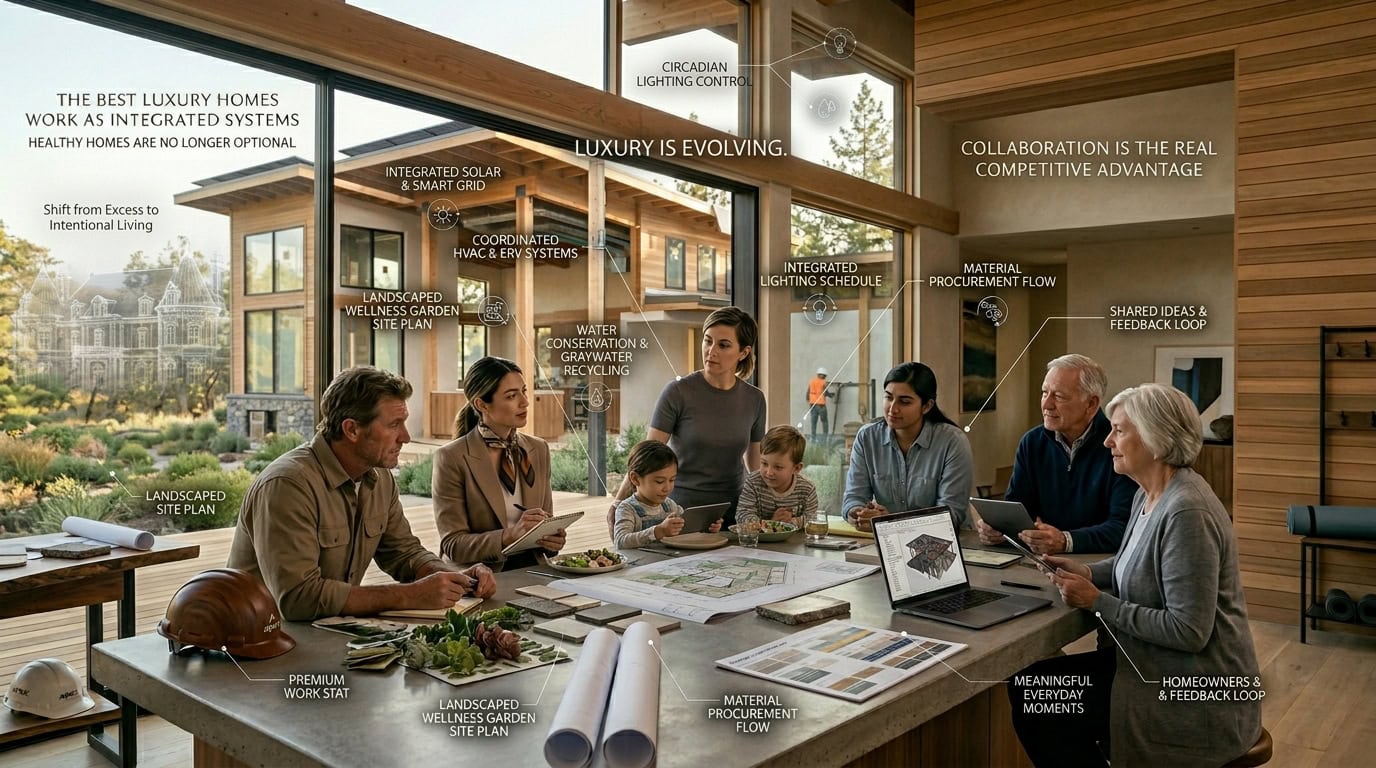
Luxury Is Evolving
Luxury used to mean bigger spaces, more amenities, and more complexity. Today, true luxury means:
- Better performance
- Better health
- Better efficiency
- Better experiences
- Better alignment between design and lifestyle
The future of residential architecture belongs to homes that are at once beautiful, intelligent, efficient, durable, healthy, contextual, and, most of all, human-centered. None of that happens accidentally. It happens through a well-defined and robust process.
Final Thought
High-performance homes are not created by a single product, certification, or technology. They emerge from early thinking, integrated design, collaborative teams, detailed coordination, clear communication, and continuous refinement That’s why the best homes begin long before construction starts. They begin with the right conversations.
Ready to Begin Planning Your Dream Home?
Explore the in-depth process of planning and designing your new home, download our free guides:
Or schedule a ClearScope Review to begin organizing your goals, site opportunities, budget considerations, and design priorities.
Next Steps
- Explore our projects: Projects
- Watch project videos: MEBA YouTube Channel
- Schedule an Intro Call: Book a ClearScope Review
- 📥 Download the Architectural Process Guide (click here)
Because the most successful projects begin with a clear vision—and the right team to bring it to life.
